How to Start Teaching ESL or EFL
Volunteer and Paid Opportunities
Do you want to know how to start teaching ESL or EFL?
Many people think that they need an English degree to teach English to speakers of other languages (ESOL), or that they need to have a teaching certificate or credential.
Yes, these qualifications are helpful; but if you don't have them and you want to start teaching English to speakers of other languages, it is still possible, especially for native English speakers.
You might be thinking, "I don't know how to start teaching English. I'm not even exactly sure what an English teacher does. Where do I begin?"
This may first depend on whether you live in a non-English-speaking country (in that case, you would need to know how to start teaching EFL—English as a Foreign Language) or an English-speaking country (where you would be teaching ESL—English as a Second Language).
Below are some ideas to get you started teaching in various settings.
Volunteer Opportunities
If you want to start teaching English and you live in an
English-speaking country, living in or near a large city will make this
easier. There are many places, such as non-profit organizations, public
libraries, YMCA/YWCAs and senior centers that have volunteer programs to
match English language learners with tutors.
Some of these organizations provide a limited amount of training to show you how to start teaching ESL. Others provide no training at all. Their main objective is to match English speakers and people learning English as conversation partners.
So if you want to start teaching ESL and are not concerned about doing this as an occupation, look for volunteer opportunities in your community.
If you are thinking about how to start teaching ESL as a profession, volunteer experience will better prepare you to teach and you'll also be more employable.
Paid Opportunities
If you are looking at teaching English as a career, then it will be
much easier if you have some background or qualifications in the field.
Qualifications can include a bachelor's or master's degree in English, a CELTA or TESOL certificate, a TEFL certificate (to teach in a non-English-speaking country) and/or a teaching credential. The necessary qualifications will vary depending upon where you want to teach.
Usually, the highest paid ESL teaching opportunities are in universities. Most require a Master's degree related to English; the best is MATESOL—Master of Arts in Teaching English to Speakers of Other Languages. Teaching in public schools ranging from elementary schools through adult schools usually requires a Bachelor's degree (not necessarily in English) plus a teaching credential.
You can also teach in private language schools. These usually require a certificate in TESOL or a CELTA (Certificate in English Language Teaching to Adults). They do not always require a college degree if you have one of these certificates and meet other school-specific requirements.
Another option is to become a private ESL tutor. There are no requirements for teaching privately. If someone is willing to pay you to teach English when you have no specific qualifications, then that is between you and your students.
That being said, understandably, most adult learners will want their tutors to have some related qualifications, and most parents of young learners will also want their child's tutor to have some qualifications. However, oftentimes just being a native English speaker will open doors and allow you to start teaching English to speakers of other languages.
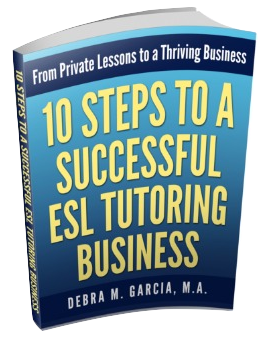
If you're thinking of becoming a private tutor, I highly recommend you take a look at my ebook, "10 Steps to a Successful ESL Tutoring Business"; it's a 120+ page book based on my experience of over a decade of privately tutoring ESL students.
How to Start Teaching English in Non-English-Speaking Countries
TEFL is the acronym used for Teaching English as a Foreign Language. This means that you will (likely) be residing and teaching English in a non-English-speaking country. You may, of course, be using another method to teach EFL in a "foreign" country, e.g., Skype.
Different countries have different expectations and hiring requirements for English teachers.
If you don't already have an English degree or a MATESOL and want to obtain qualifications as quickly as possible, research the country or countries in which you want to teach and find out if the schools there prefer a CELTA or a TEFL certificate. CELTA, TEFL and TESL certificates require relatively little time to obtain, and you can even find quality certificate programs online.
You may even find that some countries or specific jobs only require that you be a native-English speaker. Additional qualifications may be optional.
Article Related to "How to Start Teaching ESL"
Duties of an ESL Teacher - Here's what to expect in various teaching settings.
From "How to Start Teaching ESL" to "Teaching ESL to Adults" Home
Sitemap | Contact | Privacy Policy | About
All material on this website is copyrighted (© 2007-2022).
You are free to use my materials in your classes.
I just ask that you include my website address on handouts.
www.Teaching-ESL-to-Adults.com

New! Comments
Have your say about what you just read! Leave me a comment in the box below.